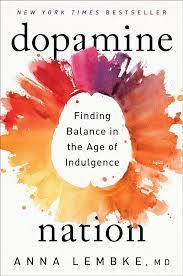
Anna Lembke seems compassionate but limits herself to dispensing the kind of old-fashioned advice you might get from George Will. Just stop doing the bad thing! Throw out anything that helps you do the bad thing! Now experience some sort of discomfort to reset your dopamine. Be honest with people about all the bad things you do.
It’s sort of like “The 7 Habits of Highly Effective People”, which basically just says “Be Effective”. Or Jordan Peterson saying “Clean up your room!”. We are in an era of dopamine-seeking dysfunction. But the book’s solution on how to fix this seems limited to personal responsibility. Not much on how well that actually works. Does AA work? The organization says 75% of adherents remain abstinent, other studies put it at more like 30%.
I would have liked to read suggestions at the societal level, and also a better ranking of which actions at a personal level have the most science-backed effectiveness and durability.
I recently saw a local musical adaptation of Dickens’ “A Christmas Carol” (“A Ghost Story of Christmas”) in which Scrooge seemed to magically change from a curmudgeon into jocund benefactor. It seemed abrupt and unearned, so I returned to the novel to try to figure out what specifically changed him.
Scrooge is someone who lives in scarcity, he prides himself on being impervious to any creature comforts: “
“External heat and cold had little influence on Scrooge. No warmth could warm nor wintry weather chill him”……”Foul weather didn’t know where to have him.” (“A Christmas Carol”, Dickens, chapter 1)
Three spirits visit Scrooge. I thought the first, The Ghost of Christmas Past, would be the main catalyst, since it show’s Scrooge as a sad abandoned boy, eventually welcomed back into the family. Victorian-era PTSD.
Everyone (except me) loves the Ghost of Christmas Present, with all the food porn and grocer’s shop porn. Also everyone super-merry, hyper-merry, maniacally-merry, especially the poor. I’m sure that in the 1840’s this part of the book would be read and reread, but I found it unrealistic. I think Victorian England was going through a “Christmas Boom” at the time, it reads as aspirational and forced to me. Contrast this section with the early scalpel like description of Scrooge. “Hard and sharp as flint, from which no steel had ever struck out generous fire; secret and self-contained and solitary as an oyster.”
This comparison with an oyster reminded me of The Book of Job, where Job describes his degraded state in terms of other creatures: “I am a brother to dragons, and a companion to owls.”
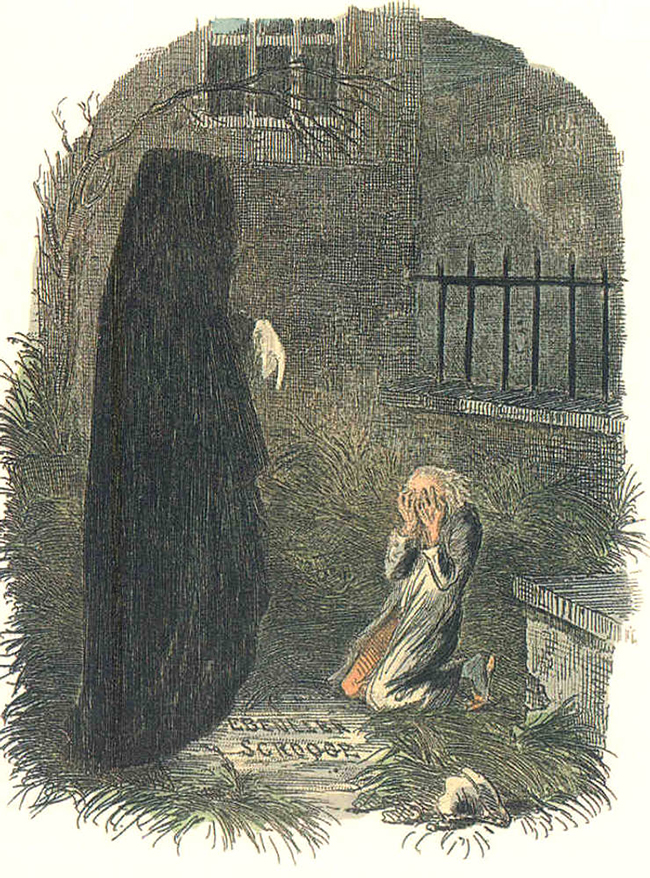
It’s the last Spirit, the Ghost of Christmas Future, that causes Scrooge to change. How sobering would it be to hear estate robbers brag about stealing the bed-curtains off of your deathbed, as you lay dying in it? Dark! The only people who express any emotion at your death are people who are happy you died because they owed you money. And finally seeing your own neglected gravestone.
Dickens was tying into human’s “attentional threat bias”, a gift from evolution that causes us to prioritize perceived threats over other types of stimuli. Although Darwin was a contemporary of Dickens, I’m sure this was a later-developed theory, so one might say Dickens was operating “on instinct” by including towards the end of the novel (taking advantage of “recency bias”).
The end result is that Scrooge is basically scared into an abundance mindset. This could be viewed through economic theory as well, he wants more value from his money. Or sociologically he was doing a sort of potlatch, seeking to inflate his status, being altruistic for purpose of pure gain. That would not have sold many books though.
In order not to be a total pre-transformation Scrooge myself, I am providing some fun definitions of Victorian-era terms that I had to look up:
withal: in addition, besides, or as well. It can also mean despite that, notwithstanding, or nevertheless.
The Treadmill: The treadmill was a feature in prisons where inmates would walk endlessly, pushing a huge wheel while holding bars at chest height. With every step, the wheel would turn, grinding corn. Prisoners were allowed 12 minutes of break every hour. (Wikipedia)
St. Dunstan: Dickens refers to the harsh weather by comparing it to St. Dunstan using his blacksmith’s tongs to grab the devil by the nose
negus: a hot drink of port, sugar, lemon, and spices such as nutmeg
Cold Boiled: “There are disagreements as to whether it is boiled beef, pork or chicken.” (https://daeandwrite.wordpress.com/tag/a-christmas-carol-menu/)
“Martha dusted the hot plates”: Cannot find anything on this, my uneducated guess is that plates were warmed by the fire and then were brushed off to remove any ashes
Smoking bishop – A hot drink made from port, red wine, lemons or Seville oranges, sugar, and spices such as cloves. The citrus fruit was roasted to caramelise it and the ingredients then warmed together. A myth persists[citation needed] that the name comes from the shape of the traditional bowl, shaped like a bishop’s mitre, and that in this form, it was served in medieval guildhalls and universities. (Wikipedia)
Posted by Roy Zornow
on 01/10/2024Comments Off on Barbie: Dolls playing with humans
After seeing the Gerwig/Bambauch toy epic “Barbie” I was left with the question “Where are the girls who play with the Barbies?” The only girl character (Ariana Greenblatt) is yet another Hollywood proto-adult, who coolly condemns Barbie as “fascist”. Aside from the comic opening which pays homage to “2001” the only actual scene of a girl playing with a doll takes place in an adult’s (America Ferrara’s) gauzy flashback scenes.
Barbie is a pink fantasy version of the latest Marvel movie. Critics seem to be responding to the high concept, the tip of the hat to “camp”, without think going much deeper. I can see a Barbie franchise in the offing “Barbie XV – Skipper’s Revenge.”
This movie goes beyond action, it addresses social issues, just not in hearts and minds of girls. The movie tries to compensate by finishing with Barbie becoming more “human”, but it’s a tacked-on solution. Barbie is popular because she is not human, and although in real life Mattel offers a Barbie with a wheelchair, and a “Down’s syndrome Barbie”, those don’t sell.
The essential contradiction embodied by Barbie dolls, that they are simultaneously liberating and oppressing, must endure, because it echoes the human condition. Liberating, because Barbie shows girls that they can be anything they want to be. Oppressing because if Barbie were blown up to human-size, her waist would be so small she would not have enough intestines to digest enough food to survive. Women face the dilemma of “I want to be like that; I can’t be like that.”
Kierkegaard addressed something similar in his concept of “despair”.
“The self is a synthesis of elements which are, and will always remain in opposition. These elements are “held together” by the person and involve a tension or an anxiety which is a constant temptation to the person to “let it go”. This would be a cowardly act, destroying the self in order to escape the anxiety. The forms of “letting go” are the forms of despair.” (p. 58 Kierkegaard’s Philosophy – Self-Deception and Cowardice in the Present Age, by John Douglas Mullen).
The Barbie movie focuses on “Barbie’s” realization of this opposition. Problems start to occur when a Barbie designer attempts to avoid Kierkegaardian despair by integrating Barbie’s shadow-side via sketches and darker character ideas.
Just as Kierkegaard described those most in despair (most in normative fantasy) as seeming “in the pink of health” (pink Barbie), when Jungian undercurrents begin to flow, Barbie unpinks: she gets bad breath and flat feet.
Barbieland is veritable “Lord of the Flies” struggle for gender domination. At first the Barbie’s rule: they occupy the top echelon of society, without effort. The Kens are literally accessories. The Barbies seem to have no problem with this injustice, and a reference is made in voice-over that this is the converse of the “real world”.
After Barbie’s trip to the “real world” including visiting Mattel headquarters, populated by harmless corporate-suit dolls, Barbie returns to Barbieland only to find it now ruled by Ken dolls. The Kens have become the oppressors, forcing the Barbie’s into abject supportive roles
Two points are overlooked here. First, the comic version of hypermasculinity which the Kens embrace dilutes the parallel dilemma that boys now face. Over time boy’s “action figures” (dolls) have become more and more unrealistically muscular, to the point where they look like steroid-using bodybuilders. The dilemma of being oneself and meeting an unrealistic ideal is one shared by both genders. The male box was played for laughs.
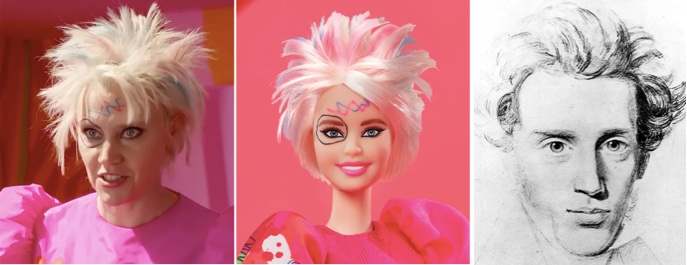
Second, female internecine norm enforcement is ignored. The fact that it’s “impossible to be a woman” is in no way tied to female aspiration to be part of the Barbie crew. If Barbie steps out of line (plays too much) the other Barbies ostracize her as “weird Barbie”, Barbie never nurtures, Barbie never IS nurtured.
I can imagine a more interesting Nietzschean take with hyper-Barbies running amok, openly oppressing any weakness, yet succumbing to the inevitable consequences of Kierkegaardian despair: loss of meaning, identity, self. Similarly the Ken/G.I. Joe identity-havoc-wreakers would create their own personal Armageddon. The only hope, in this future and perhaps our own, would be a small girl and a boy who picks up a broken doll, strokes their synthetic hair and tells them it’s going to be OK.
Where do the “Not-Ready-for-Prime-Time Players” go when there is no more prime time?
Built into the name”Saturday Night Live” is its nature as “appointment tv”. Wickedly subversive in its heyday, the current incarnation seems to have nothing left to subvert. It’s target age-group doesn’t watch tv anymore, they hang out in Twitch virtual rooms, watch 15 second TikTok videos, or log on to Discord servers.
SNL debuted in 1975, when there were only 3 networks and a handful of VHF channels. You want to talk about an “Influencer”? Johnny Carson and The Tonight Show dominated late night t.v. and had a huge role in defining popular culture. Today the late night genre offers us exhausted “Jimmys” in suits, aping the talk show rituals, sets, and sidekicks of their grandparents era. Ratings are way down: there are too many online and cable alternatives, and the guests are too scripted. You will not find the spontaneity of guests who regularly drank and smoked prior to going on air. The Charles Grodins, Robert Blakes, Angie Dickensens….now that was reality t.v.
Thus the SNL parodies of the time didn’t need to squeeze too hard to get the juice. Remember Dan Ackroyd’s impersonation of Tom Snyder, host of the Tomorrow Show? It was considered wildly over-the-top at the time. Compare it to anything the current show’s breakout star, “walking 4th wall” Kate McKinnon does.
If you believe in Truth in Comedy, it’s important that the writers and performers on SNL reflect the lived-experiences of their age cohort. Instead they are writing and acting in sketches that take place in a bygone reality. I sympathize, they have an impossible task, teenagers and young adults today simply barely interact with each other outside of virtual spaces. What you are seeing in SNL is nostalgia performed by people who never made the memories.
Imagine a skit set in a Thanksgiving scene: probably a bunch of family members arguing, someone has a secret, there’s a weird overly-political uncle, etc. In reality, although a family will be in the same room, anyone under 30 is going to be glued to their phone, in some version of cyberspace.
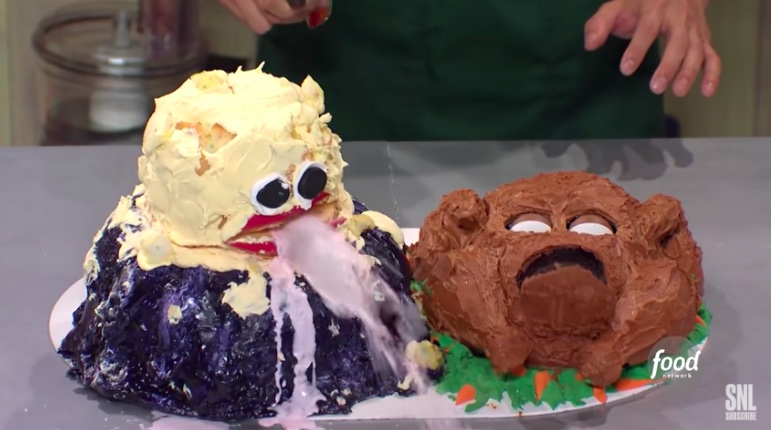
So how do you make comedy without interaction? SNL hasn’t figured that out – nor has practically anybody – so they resort to barf jokes, poop jokes, and endless clunky impressions.
I’m not saying that the original SNL didn’t have some of this. But the shock value of a character throwing-up in a sketch is just not the same the 5th decade in.
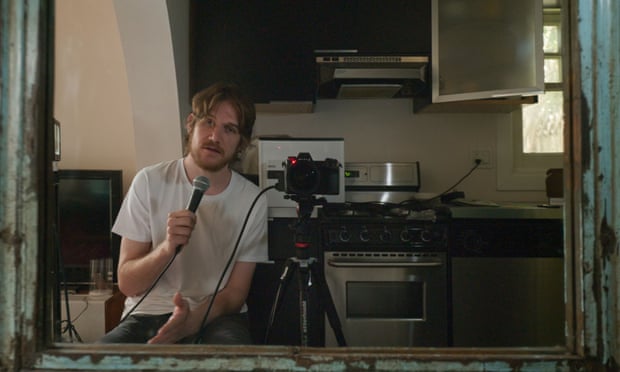
The closest I’ve seen of someone seeking comedy in the virtual world is Bo Burnham, who’s Netflix special “Inside” is shot in an attic room, with him alone, singing songs about things like chatrooms, Facetime, Jeff Bezos, and Instagram. In the final frames you see him sprawled out on the floor, alone and surrounded by technology. It’s sort of a “Krapps Last Tape” for the internet age. But it’s more wistful than funny.
Bo Burnham: “Inside”
Is comedy in the same predicament? Throughout the ages comedy has relied on elements like misapprehension, mistaken identity, false bravado, exaggeration, absurd physical action, mockery (especially of the powerful by the powerless), and exposed hypocrisy. Virtualization, mediated reality, and the identity curation endemic to social media, inhibit all of these. How can a status difference “land” when we don’t know anyone’s real identity (“on the internet no one knows you are a dog”)? How can an exaggeration retain its power when every TikTok video features grotesque facial affects and speeded-up helium dialog?
Comedy also can’t exist without consequences. Seeing two clowns bop each other over the head with harmless foam baseball bats over and over gets boring very quickly. When consequences are “virtualized”, e.g. the worst that can happen is you lose armor points in an RPG, or you have to create a second account in Twitter, then there’s is nothing to get worked up about, or to laugh about.
Compare this to a historical phenomenon where the stakes cannot have been higher: “Jonkunnu”, a Christmastime holiday in the U.S. during slavery, during which the enslaved would dress up in grotesque costumes and mock their enslavers – I imagine the subtexts of danger and subversion must have made have made a fertile ground for hysterical laughter.
When considering the harms of mediated reality, I remember a comedy improv class where the teacher, in counseling us towards naturalism, stated that the most fascinating thing in the world was an awake young baby. People are naturally drawn in, because every motion and utterance is spontaneous and true. Which is the opposite of mediated reality.
Don’t make a sad face though. There are 3 trends that bode well for comedy: 1. Ever-greater technological privacy invasions: tracking, biometrics, facial recognition, etc. which remove anonymity 2. The inevitable class exploitation that will take place on the internet, of which Jarod Lanier has forewarned, which will create status disparities 3. Emerging general artificial intelligence’s baked-in inflexibility and tyranny
So we will eventually have a return to consequences, status differences, and cyber-overlords to mock. The question is, will the algorithms allow anyone to tell a joke?
Posted by Roy Zornow
on 12/05/2018Comments Off on Making horror movies less scary
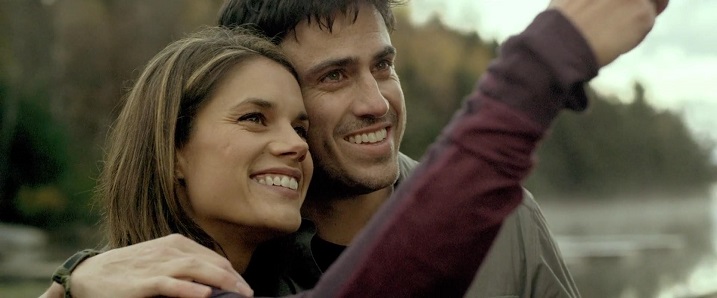
Backcountry, a horror-survival story about a young couple whose camping trip ends poorly, has opened to good reviews. Manola Dargis of the NY Times says of the couple: “It’s diverting, unnerving fun watching their descent, at least for a while.” She couldn’t be more right, although it’s not just for awhile, it’s for the entire movie, and that is why people go to see horror movies.
Films like this would be genuinely terrifying if you could put truly imagine yourself in the shoes of the main characters, sharing their experience in an unmediated way. This would not be entertainment. To make the horror palatable, writers and directors let you in on the secret beforehand, tacitly informing you of their awareness of your ambient anxiety. Movies which stray from this awareness, think Hitchcock here, are rightly seen as more frightening. Modern “hardcore”horror movies seem to me to rely on the viewers startle-reflex. The insidious nature of Hitchcock is the intentionality with which he keeps you off-base. You never expected to be frightened by an ever-increasing flock of birds perching on playground equipment did you? Why would you?
But in Backcountry, as Dargis points out, you know from the moment the boyfriend refuses a map in the ranger’s office, that ill will befall the couple. In a sense that the couple deserves their misfortune. When a bear finally attacks, you saw it coming, and at this point are watching to see how graphic the scene will be. It creates a mediocre meta-experience: not experiencing the horror itself (which would be too disturbing), but instead the experiencing the drama as a correlate of level of DEPICTION of the horror. How far will the director go? Films like this are considered successful if director goes slightly beyond what the audience expected. But expect it they must. In filmic language this is done through details like an axe being left too far away to be of use in defense, or by a person accidentally cutting themself before swimming in shark-infested waters.
To me this is a stale pattern, and the solution is to cover subjects which are less inherently horrifying, but cover them in a way that is more realistic. Less foreshadowing, fewer tropes, more randomness. Loss and lack of control. The opportunities for this are endless – you could make a horror movie out of an unexpected divorce. However some incidents, like Timothy Treadwell’s death audiotape in Herzog’s Grizzly Man, are just not for popular entertainment.
Posted by Roy Zornow
on 11/19/2018Comments Off on The Godfather Part III: Calling Pacino’s bluff
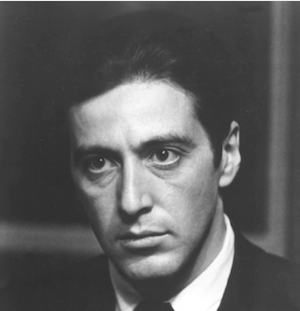
Pauline Kael, in her review of The Godfather Part III, draws a parallel between Francis Ford Coppola’s personal aggrieved exhaustion during the time the movie was made, with the lifelessness of the film he ended up directing. This is a subtle compliment to the role of director:to imply that the director’s subconscious cannot help but be leak through through the celluloid.
Kael’s chief complaint about Part 3 was the “lack of a driving force”, which she saw reflected in Al Pacino’s slouching face. But Pacino didn’t just slouched, he also blustered. Was it to compensate for this “low-energy Coppola” that he turned the “hoo-ha” up to 11 in the last installment?
Kael is kinder than I am in this regard, mildly praising Pacinos performance, attributing a lack of dramatic tension to Robert Duvall’s absence. His performance isn’t just drastically different in III, it is the complete opposite of everything that made Michael Corleone compelling in the original Godfather. That was one of the great performances in film history, epitomized in the close-up of Michael’s nervous darting eyes during the seconds before he murders Sollozzo and McCluskey at an “Italian American” restaurant. Pacino’s Michael was characterized by a tortured restraint, an anxious, quiet toughness. You could see the price he was paying with every decision.
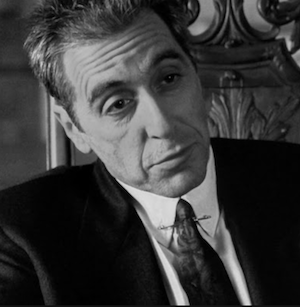
Fast-forward to cocaine-era Al Pacino in 1990: Michael’s voice has gone from sotto to strident. His New Yawk accent is stronger despite the fact that he’s relocated to Vegas. He’s external, not internal. I loved Pacino in Dog Day Afternoon, I was a bit awed, if not entirely sold, by Scarface. The problem I had with 1990 Pacino was that everything good about his character had been lost abandoned.
Was this to inject a little life in Godfather 3? I don’t think so. To me he was, like Coppola, exhausted. There simply wasn’t enough energy there to generate, much less contain the inner conflict. He substituted the a hollow frenzy for a quiet inner force.
I also thought it was a weakness for Coppola to go full “faux-Scorcese” in the slow-motion operatically scored killing spree in the Teatro Massimo at the end of the film. I’ve grown to hate this now-lazy style, and it’s inescapability – I’ve seen it in tv commercials where slow-motion potato chips fly through the air, part of a comic household mishap, as music plays in the background.
Sophia Coppola was not the disaster she was made out to be. Not a trained actress but not a disaster.
I saw an interview with Robert Duvall on “The Today Show” from about the same time The Godfather Part III was released. He declined the role because was not offered comparable money as his costars, and, as he said, “Everybody was in it for the money”. His description of Brando’s acting technique was that a sheet of paper with Brando’s lines would be taped to the forehead of whichever stand-in was playing the role opposite, and Brando would then read the lines from the paper. And what a performance. Perhaps if Michael Corleone wore reading glasses….
The real story of 2018’s “A Star is Born” is how its stars, who play stars, are unable to do anything but imitate how someone would behave when they achieve stardom, rather than expose their own “lived” experience.
Bradley Cooper’s gives the portentous advice ” Look, talent comes everywhere, but having something to say and a way to say it so that people listen to it, that’s a whole other bag,” even as he is directing a movie with nothing new to say. It’s a timid note-for-note copy of it’s predecessors. He has even artificialized his voice, it’s a gravelly octave lower. in order to better imitate a burned-out rock-star.
And he’s imitating only the good parts. With the exception of a couple of pasted-on jarring bouts of bad behavior, Jackson Maine is the most courtly “self-destructive drunk” ever seen. Have you ever known a real alcoholic? They are ANGRY. They are bloated. They lie. Not once and then tearfully apologize, they lie all the time. They don’t black out in a hotel room and spring up the next morning to laugh and quip over room-service breakfast. That’s not what a blackout hangover looks like.
Gaga however does show some realness, but not about her character. It’s about the earnest of wanting to do a good job as an actor. We see her caring about pulling out the right emotions. And in a way that’s endearing and makes us want to care for her. But it’s not what an ingenue propelled to stardom would feel. Instead she would be subject to roiling welter of emotions: being caught up in her new power, feeling like an imposter, having a sense of vanquishing her naysayers, worrying over how long it would last, experiencing both appreciation and resentment for the fact that the launching of her stardom was due to her partner. These are all missing, instead the script has her character put on the cloak of success with ease, with a few shouts back to her goombah muckety-muck adopted family of commercial-ready livery-cab drivers.
Unless we see these real, and often conflicting emotions, there is no way to care about the characters or to root for them as a couple. Cooper and Gaga seemed to be saying their lines in a soap-opera-esque fraught way, with the occasional burst of emotion that seemed more to do with the novelty of movie-making than with how they relate to each other. By the end one grows weary of Jackson Maine, there was no real dark side to him. So his efforts at redemption seemed superfluous.
Imagine if he had been a real bastard, and yet we still cared for him. Or if Gaga’s ego had blown up but she was able to cast it aside and return to humllity when the chips were down. That really would have been “having something to say.”
The Voyeur’s Motel is a book of reportage about reportage. Sounds pretty boring right? Like writing about writing? But here the ultimate subject is compelling to the point of prurience:
“I know a married man and father of two who bought a twenty-one-room motel near Denver many years ago in order to become its resident voyeur. With the assistance of his wife, he cut rectangular holes measuring six by fourteen inches in the ceilings of more than a dozen rooms. Then he covered the openings with louvred aluminum screens that looked like ventilation grilles but were actually observation vents that allowed him, while he knelt in the attic, to see his guests in the rooms below. He watched them for decades, while keeping an exhaustive written record of what he saw and heard. Never once, during all those years, was he caught.” (Gay Talese in his New Yorker magazine summarization of The Voyeur’s Motel)
The reason these written records, compiled in the 70’s and 80’s, are interesting, is that they provide a record of the actual, as opposed to self-reported sexual practices of people. Self-reporting about sensitive subjects like sexual behavior, drug use, and of course penis size is inherently unreliable. Like Updike said, the truth is always interesting.
With that buildup, it’s disappointing that the transcripts are largely commonplace. A blowjob here, a breast fondling there. An oft-described scene is an insensitive man thrusting into a woman who is not at all turned on. Lesbian encounters are described as being much more communicative and loving. The Voyeur, whose nom de plume is Gerald Foos, turns against the Viet Nam war after seeing disable veterans trying to have sex in his motel rooms.
The question of whether those behaviors would be different today, given the free availability of sexually-explicit content on the web, is never explored. Remember this is taken from a time when even the “great” novelists, Updike, Roth, Bellow, could only timidly allude to anal sex. Which is something you might see discussed on The View today.
Gerald Foos asserts that all men are voyeurs, and traces his own obsession back to his childhood seeing his buxom aunt walking around nude in her nearby house. This book isn’t about the arc of Foos’ life though. He considers himself to be a pioneering sex researcher but he comes across as a sort of resourceful “Rabbit Angstrom”, who ends up selling his motel and retiring with a large sports memorabilia, yearning for nothing more than a single-story house which will not challenge his arthritic knees and back.
As a reader you hope for a grand insight, but, like with most final utterances of the dying, nothing is revealed. This closest to a moral that Gerald Foos is left with is that people behave very differently in private than they do in public, and for the most part people are dishonest:
You can never really determine during their appearances in public that the private life is full of hell and unhappiness.I have pondered why it is absolutely mandatory for people to guard with all secrecy and never let it be known that their personal lives are unhappy and deplorable. This is the plight of the human corpus,” and I am sure provides the answer that, if the misery of mankind were revealed altogether spontaneously, mass genocide might correspondengly follow.
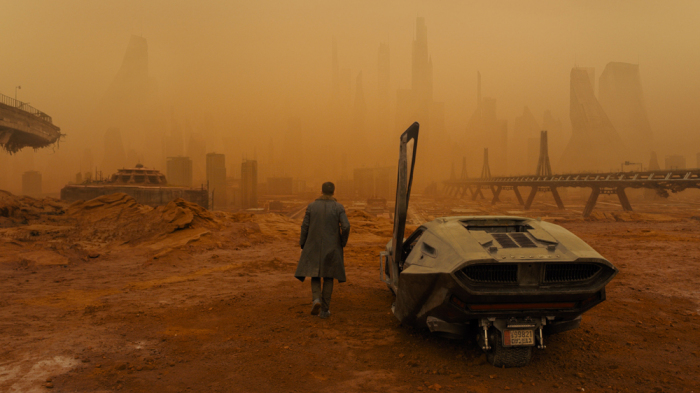
The noir tones of the original Blade Runner are replaced in Blade Runner 2049 by ashy whites of a dusty landscape that look like either an alkali farm or Ice Station Zebra. This seemed the perfect photographic “negative,” a brighter view than the original, suggesting that things hidden would be revealed – daylight would let us examine the issues raised in the original without that constant rain and dank sense of dread.
And who more normal a protagonist than Ryan Gosling, the perfect emcee,he of LaLaLand and The New Micky Mouse Club. Like a talk show host he would take care of us. In the original Blade Runner no one took care of you. It’s uncompromising, gemlike, almost cruel. Yet how I longed for the discipline of the sharp cut after two hours and forty-nine minutes of this blob of a film.
The only leavening (see previous review of the original) is a confusing, overblown plot, one that screams for another sequel in which the “humane” replicants will begin to breed and rebel against the machine-like cruel humans. Perhaps their leader will be named “Caesar”. We’ve seen that story before.
The original Blade Runner raises the issues of what it means to be human vs. replicant, whether it’s a meaningful distinction, and what part death adds to that meaning. In the sequel the desire of the replicants isn’t “more life, fucker” it’s the ability to reproduce through birth, without a master-builder. If this sounds confusing it is: why does the manner in which you are produced matter? The more important questions raised by the original are dropped; To what extent do humans have free will? Are human’s just “wet robots” who are “programmed” by our genetic code? What is the significance of the fact that humans can change our genetic code via epigenetics? Are replicants able to have free will ? The Nexus 6 replicants rebelled, which was not programmed into them, what gave rise to that? Coding errors? Is all creativity a coding error, a mutation?
The only way that these questions can be made compelling is placed in the context of relationships. Both the original and the sequel failed on that score. The original was structured in a way that this weakness mattered less: it was fractalized, episodic. The lack of strong relationships in Blade Runner 2049 was made more glaring by it’s construction as a standard narrative, a space western. A successful sequel only works if it moves the concepts of the original forward, in other words, if it adds. More plot does not count, it makes things worse. Watching this film I felt like I’d been dumped into season 4 of “Game of Thrones” without ever having seen an episode beforehand.
Hampton Fancher, was bitterly upset after getting replaced by David Peoples as a writer on the original, and as the writer of 2049 he layers on every plot twist he can think of. Is “K” the first-born child of replicant Rachael, and maybe-replicant Deckerd? Or was that a female child? Or they were twins so both? Would that mean we now have races of reproducing replicants, along with humans? Why does this matter? Because the replicants are so much smarter and stronger and would crush the humans? Would they employ their own non-breeding replicant helpers? This movie bites off way more than it or the audience can chew.
Ryan Gosling, like Sarah Jessica Parker, seems always aware of his own celebrity. The now slurring Harrison Ford makes an appearance 90 minutes in. He has transformed into an actor who always seems partially demented and wild-eyed, like an old man ordering kids to get off his lawn.
Let’s try to really be creative and think of how the themes raised in the original movie could have been developed, advanced, without Villanueve’s derivative treatment:
The world is vastly different from what it was 32 years ago. Humans are no longer crowded into wet alleys and overcrowded cities. They are in brightly-lit but sterile parsected sections of land on 9 planets. It’s hard to tell how old people are because they have had parts of themselves replaced and enhanced. At the same time replicants are self-learning and can imitate humans perfectly. The Blade Runner killers have selected for only those replicants who can pass the “20 Questions” test, and these do in fact exist since Tyrell created “special” models, like we saw with Rachael. Some humans have artificial wombs, as do some replicants.
Humans can form relationships with replicants and not realize they are replicants. Humans can have parts of their brains rewired through nanotechnology. At this point there is no longer meaningful distinction exists between humans and replicants. No one needs to die. And this triggers a crisis. When you have everything what do you have? What do you lack? You lack meaningful struggle.
People (humans and replicants) start to die, to self-retire, for no apparent reason. Is it because of a malevolent AI or is it the only volitional act anyone has left to make? The new “K” is on a mission to find out. He must hope it is a malevolent Artificial General Intelligence or even his own struggle will be meaningless.
It turns out Roy Batty and Pris, who were “special” replicants had a girl child before they died, who hid out as one of Sebastian’s toys. She is now 32 years old and is just as invested in finding out why people are mysteriously self-retiring as K is, because it turns out that Roy Batty did not have to die, he chose to die.
The daughter has an inherent conflict with “K” – since K’s father, Deckerd killed her mother Pris. This animus is eclipsed by their shared mission. They begin to bond. They discover that there IS a malevolent Artificial General Intelligence and are able to defuse it right before it goes into singularity. After they do this they feel the weight of that original certainty, now the meaninglessness comes back. But just then they are informed that unexpected neural networks have started appearing shortly after communication has been established with a species from a new planet.
I think it would be interesting to create a film that centers around what would give life meaning when we are all half-machines (and we are getting closer with Elon Musk’s Neuralink initiative), versus Blade Runner 2049’s reduction of identity to born vs. not-born.
I haven’t written in awhile, due to a general exhaustion with popular films, the sameness of every preview I see, and the substitution of CGI for character development. Is it possible to have drama without special effects? It’s as if we are so numbed out that we forget the emotions of everyday life: the nervousness of going to a job interview, the anger felt when cut off in traffic, the happiness of seeing a loved one after a long separation. Perhaps these are not cinematic enough? I find that cartoon violence I see in so many films is largely consequence-free and thus boring. This fake violence inoculates us from fear and gives us a safe cinematic zone. One that, for some reason, seems to be needed now more than ever. Back in the first days of film, when audiences were unfamiliar with the medium, they would shy away from an onscreen speeding locomotive. Today they are only comfortable with a speeding locomotive, running over an super hero who pops up unharmed.
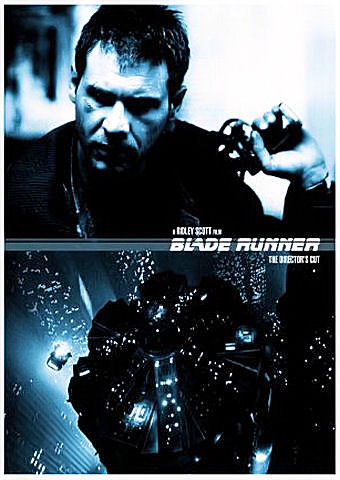
Another issue is the plethora of movie sequels, which I call “sequela” (“a condition that is the consequence of a previous disease or injury”). Despite this, I look forward to the upcoming Blade Runner sequel, Blade Runner 2049. It prompted me to go back and take a fresh look at the original director’s cut of Blade Runner, which is set in fast-approaching 2019.
Although it’s one of my favorite films, I find Blade Runner difficult to watch. It’s got a classic themes (the quest for immortality, what it means to be human), a love story, and is solidly in the film noir genre. Despite sweeping cinematography of futuristic night vistas and the megapolis of LA in 2019, there is also a mood of sepulchral opacity: settings are dark, rainy, crowded, smoky and harsh. Pauline Kael noted “we’re never sure exactly what part of the city we’re in, or where it is in relation to the scene before and the scene after (Scott seems to be trapped in his own alleyways, without a map.)”. The spectacular visuals don’t seem to be bound by an animating force. Completely opposite is a film like Triumph of the Will where the spectacle is in support of an idea, or in that case an ideology. And even though that ideology is odious, from a purely cinematic perspective the brightly-lit, symmetrical scenes are visually appealing and in that sense pleasurable. Whereas when immersed in Ridley Scott’s world, you end up feeling like you are on dark north wall in Game of Thrones, longing for the sunlight of the Dothraki kingdom.
What’s the idea behind this juxtaposition of beautiful structures with roiling ghettos of would-be 2019 Los Angeles? Perhaps it’s a more nuanced take on the idea of the destructive effects of technology. Technology-fueled apocalypse is well-explored territory in film: I am Legend, 28 Days Later, Brazil, Logan’s Run, Planet of the Apes, all the way back to Metropolis. Today in the news we hear Elon Musk and Stephen Hawking warning us to prepare to bow down in obeisance to our artificial intelligent overlords. In Blade Runner the apocalypse has been partial. There are gleaming palaces and flying cars, but for most it’s dirty, dark, and dusty. Humans have not been exterminated or enslaved, but live as scurrying ramen-eaters and goods-hawkers. In this sense Blade Runner is closer to Bong June-ho’s Snowpiercer than it is to most post-apocalyptic movies.
Given this grubby existence where everyone is looking out for themselves, the love story between Sean Young’s Rachael and Harrison Ford’s Deckerd should gain significance and perhaps be redemptive, but the characters are hampered by the blind loyalty to the close-mouthed film noir style. Not much is said, and not enough is felt.
Despite these flaws, Blade Runner is an immersive, imaginative, well-acted, impeccably cast, patient film. I disagree with Kael’s assertion that Rutger Hauer stops the film every time he appears, and should win the “Klaus Kinski Scenery Chewing Award.” As the doomed prodigal son he deserves some scenery to chew and I found him energizing. Harrison Ford is at his peak but underplays the role, he always seems to have just woken up.
Blade Runner is painterly and demands a suspension of the audience’s desire to cede a portion of their critical responsibility to predictable filmic memes: buddy movie, gang of lovables, guy gets girl, righteous revenge, or what I see a lot of lately: “togetherness overcomes evil” (Guardians of the Galaxy, It). No comedy relief, no wisecracking Bruce Willis-in-Moonlighting character. It’s my favorite movie to see once every 20 years. Let’s see if the sequel leavens the bread.
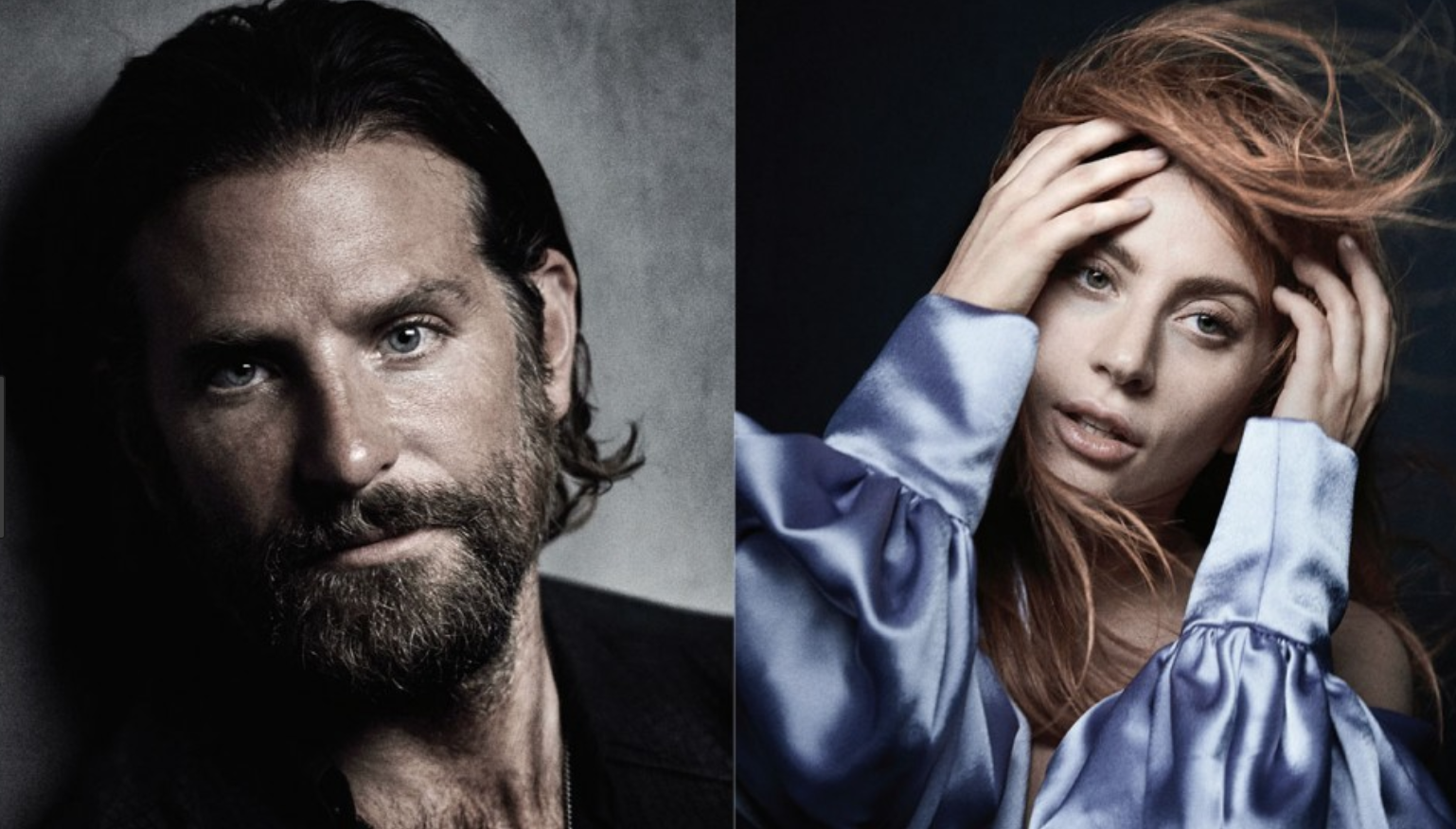
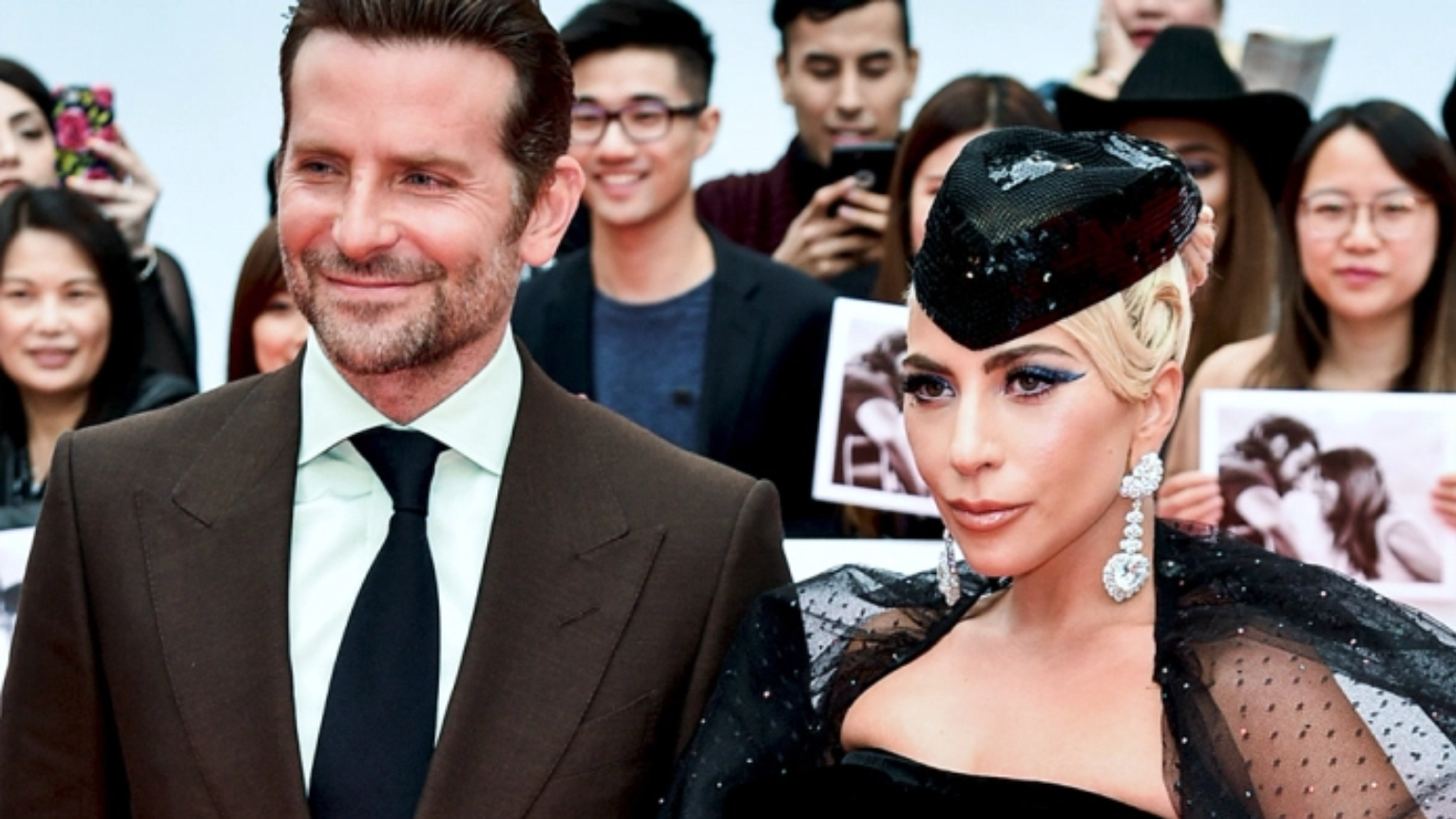 The real story of 2018’s “A Star is Born” is how its stars, who play stars, are unable to do anything but imitate how someone would behave when they achieve stardom, rather than expose their own “lived” experience.
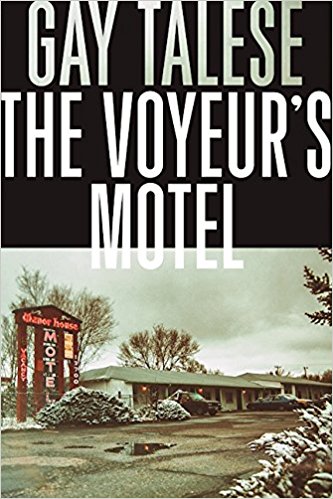 The Voyeur’s Motel is a book of reportage about reportage. Sounds pretty boring right? Like writing about writing? But here the ultimate subject is compelling to the point of prurience: